
Collagen: complete guide to choosing and using it correctly
Collagen has become the most searched-for dietary supplement in France, but between marketing promises and scientific reality, it's hard to know what to believe. Does it actually work? Which one should you choose? At what dose?
This guide gives you clear answers, based on recent clinical studies and the selection of patented ingredients we apply at Nutri&Co. You'll find out how collagen actually works in the body, what collagen is actually used for, and how to identify effective collagen formula. Our formulations are based on patents with a 100% traceable supply chain (Naticol®, Cartidyss®, Morikol®), with quality analyses published batch by batch on each product page.

at least
Collagen production slows down every year starting at age 25-30

40 years old
By age 40, the decline in collagen production can reach -15%

proteins
30% of the body's proteins are collagen

and a guaranteed content of di-/tripeptides for better absorption and maximum effectiveness
What is collagen?
It's the structural protein of the entire body. It's found everywhere: [1]
- In the skin, it provides firmness
- In bones and cartilage, it provides strength and cushioning
- It's also found in tendons, ligaments, and even blood vessels.
Although there are 28 types of collagen, three of them are the most abundant and essential for our health:
- Type I: It's the mainstay of skin, tendons, and bone matrix. It's the most abundant (90% of the body's collagen).
- Type II: The specialist for joints. Type II collagen forms the cartilage mesh that absorbs shocks.
- Type III: Often paired with type I, it's also found in muscles and vessel walls.
The clinically proven benefits of collagen
Research on hydrolyzed collagen peptides has accelerated notably over the past two years. Researchers have identified a mechanism that early skeptics had missed: the "signaling" mechanism. The di- and tripeptides produced by its digestion are bioactive fragments that reach the bloodstream and act as signaling molecules. Their presence stimulates the production of collagen, elastin, and hyaluronic acid by skin fibroblasts and cartilage chondrocytes. [3-5]
On the skin
A meta-analysis of 26 randomized controlled trials (Pu et al., 2023) confirms measurable improvements in skin hydration and elasticity compared to placebo. Benefits on wrinkle depth and firmness are documented after 8 weeks of regular intake. [7, 11, 14] Learn more about the effect of collagen intake on the skin.. Collagen may also contribute to the quality of nails and hair, whose fibers are made up of structural proteins similar to collagen, though data on this aspect is still lacking. Learn more about collagen and hair
On the joints
An updated meta-analysis of 11 randomized controlled trials (Simental-Mendía et al., 2025) shows a significant reduction in pain and functional discomfort related to knee osteoarthritis. These findings are confirmed by an earlier meta-analysis (García-Coronado et al., 2019) on joint comfort and mobility. [9, 10] Find the benefits of collagen for joints in our dedicated article.
On bones
A meta-analysis published in Frontiers in Nutrition in 2025 suggests a significant increase in bone mineral density, particularly in the spine and femoral neck, with enhanced synergy when collagen is combined with calcium and vitamin D. [13]
On muscles
A 2024 integrative review indicates a potential role for collagen peptides in reducing post-exercise muscle fatigue and supporting muscle mass, when combined with resistance exercise. [12]
Detailed mechanisms, clinical scores, and dosages by target: All the benefits of collagen, mechanism and dosage by goal
Comment choisir son collagène ?
Between molecular weight, patents, types I/II/III, and marine or bovine origins, there are many criteria for choosing a good collagen — and they're often poorly explained. To help you see things clearly without drowning in technical jargon, Édouard, founder of Nutri&Co, answers all your questions in detail in our expert guide: Which collagen should you choose? The essential criteria
And to help you choose between our two formulas (Marine Collagen vs Tripeptides), see our product comparison below.
Nutri&Co: the best marine collagen supplements
Some collagens are more effective than others. Here's how we've designed our ranges to guarantee real effectiveness. Marine Collagen is the essential, versatile solution for daily overall maintenance of skin and joints, while Collagen Tripeptides is the highly concentrated, next-generation expert formula for fast, deep corrective action.

 The versatile essential
Marin
30 Days
For comprehensive daily action (skin and joints) with maximum taste enjoyment.
- Assimilation(poids moléculaire moyen)2 000 Daltons
- Tripeptide contentTeneur standard non quantifiée
- Biopeptide contentNon quantifiée
- Effective daily dose5,5 g
- Composition(brevets)Naticol®, Cartidyss® Vitamine C
- Types of collagenTypes I, II et III
- Source of collagenMarin
- GoalsFermeté et élasticité de la peau
Confort articulaire - FormatPoudre
- ActionEntretien et prévention
- Price / day1,03 €
- Peach
- Cocoa
- Lemon
- Vanilla
- Red fruits
- Neutral
- Matcha

 The versatile essential
Marin
3 month
For comprehensive daily action (skin and joints) with maximum taste enjoyment.
- Assimilation(poids moléculaire moyen)2 000 Daltons
- Tripeptide contentTeneur standard non quantifiée
- Biopeptide contentNon quantifiée
- Effective daily dose5,5 g
- Composition(brevets)Naticol®, Cartidyss® Vitamine C
- Types of collagenTypes I, II et III
- Source of collagenMarin
- GoalsFermeté et élasticité de la peau
Confort articulaire - FormatPoudre
- ActionEntretien et prévention
- Price / day0,84 €
- Neutral
- Lemon
- Red fruits
- Peach

 The intensive expert
Tripeptides
30 Days
For targeted "next-generation" effectiveness, faster results, or deep anti-aging action.
- Assimilation(poids moléculaire moyen)1 000 Daltons
- Tripeptide content25 % garantis
- Biopeptide content25 mg min. garantis par dose
- Effective daily dose2,5 g
- Composition(brevets)Morikol®, Solugel® Supra, Cartidyss® Vitamine C
- Types of collagenTypes I, II et III
- Source of collagenMarin
- GoalsFermeté et élasticité de la peau
Confort articulaire - FormatPoudre
- ActionCorrection et action rapide
- Price / day1,33 €
- Neutral
- Peach
Our other collagen products
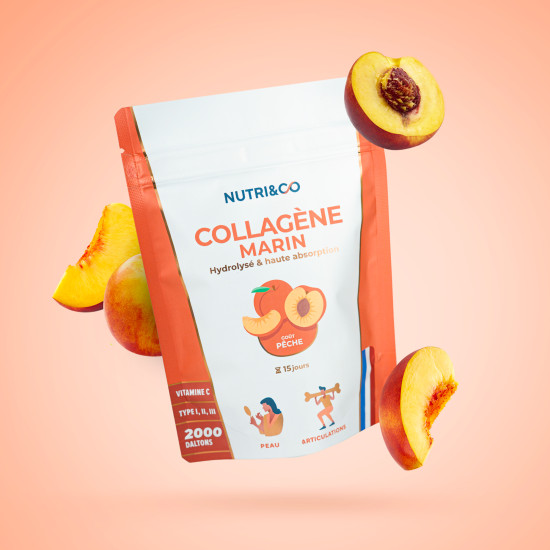
15 days


6 g – 1 serving
Try our different flavors before choosing your format. A simple way to discover the taste of our collagen and find the one that will accompany you every day.
- Vanilla
- Neutral
- Peach
- Lemon
- Red fruits
- Matcha
How to take collagen correctly?
How should you take your collagen for it to be effective? You can take your collagen however you like, at any time of day. What matters is doing it every day.
When should you take collagen?
In the morning at breakfast, at midday, or in the evening. The timing doesn't matter much, as long as you take it regularly.
Can you take collagen every day?
YES. Collagen works over time, so it's important to take your collagen every day. Results on skin and joints build up over time.
How long should a collagen regimen last?
A collagen regimen should last at least 1 to 3 months to be fully effective. Results on skin and joints build up over time — consistency makes the difference, not dosage. To find the right dosage for your profile (age, goal, level of physical activity), check out our complete guide: How to do an effective collagen regimen
In drinks and recipes?
Our powders are designed to dissolve easily. They're heat-resistant, so you can mix them into your coffee, tea, smoothie, or even yogurt. The natural flavors (or the neutral version) make it enjoyable to take, with no aftertaste.
Why is collagen talked about so much?
If collagen has become the star of nutraceuticals, it's not just a passing trend — it's a response to an unavoidable biological reality: aging.
Who is collagen recommended for?
The majority of adults could benefit from a collagen regimen. Our bodies naturally produce collagen, but this internal factory starts to slow down from around age 25. It's estimated that we lose at least 1% of our collagen stores every year. By age 80, we may have lost up to 75% of our reserves. This decline is accelerated by various factors such as UV rays from the sun, smoking, pollution, intense physical activity, and an unbalanced diet high in sugar. [2]
In conclusion, whether it's to preserve youthful skin, support intense physical activity, or ease joint aging, no one is exempt from the natural decline in collagen — supplementation can be beneficial for everyone.
Isn't collagen simply broken down in the stomach?
This is a legitimate objection raised by some experts. It deserves a clear answer.
It's true that native collagen, like any protein, is largely broken down during digestion. That's exactly why the form of the collagen you ingest makes all the difference.
High-quality hydrolyzed collagens (peptides), particularly those with a molecular weight between 1,000 and 3,000 Da, release specific fragments during digestion called di- and tripeptides (notably Pro-Hyp and Hyp-Gly). These fragments are small enough to survive intestinal transit and pass intact into the bloodstream, unlike isolated amino acids.
Once in the bloodstream, these biopeptides don't work by "directly rebuilding collagen." Instead, they appear to act as signaling molecules: sending a message to fibroblasts (skin) and chondrocytes (cartilage) to boost their own production of collagen, elastin, and hyaluronic acid. This mechanism is documented in studies published in peer-reviewed journals. [3, 4, 5]
What matters, then, is the quality of the collagen you choose: a controlled molecular weight, a guaranteed tripeptide content, and a traceable origin — not just any collagen powder.
Who should take collagen, and when?
Depending on your age or lifestyle, your collagen needs change.
Collagen for athletes
Tendons, ligaments, and cartilage are put under heavy strain by intense training. Studies show that, combined with training, collagen supports joint comfort and helps recovery of stressed tissues. [6]
For athletes, continuous intake or long-term regimens (3 to 6 months) during periods of intense training are ideal.
Collagen for people over 30
The first stage of prevention: signs of skin fatigue start to appear, and collagen reserves begin to erode. [7]
Collagen for people over 50
In people over 50 and menopausal women, the hormonal drop accelerates collagen loss to up to 2% per year, affecting both skin and joints. [8, 9]
L'avis de l'expert
“ En associant les types I, II et III, le collagène marin Nutri&Co fournit les briques essentielles à la réparation du cartilage, des tendons et des muscles. En plus de cette nutrition ciblée, le renforcement et le travail de mobilité apportent la stimulation mécanique nécessaire pour bien intégrer ces nutriments dans les tissus. Cette synergie entre mouvement et complémentation offre une protection optimale contre les blessures d'usure. ”
Pamz Therapy Kinésitérapeute spécialiste du running et de la performance
Collagène en poudre ou en gélule ?
La dose efficace de collagène validée par les études cliniques se situe généralement entre 2,5 g et 10 g par jour suivant les formulations. Pour atteindre une telle quantité avec des gélules classiques (contenant souvent 500 mg), il faudrait en avaler une très grande quantité, ce qui rend la prise quotidienne fastidieuse et peu agréable sur le long terme.
La poudre. Nous avons opté pour la poudre à diluer, le seul format qui permet d'atteindre la dose efficace en une seule prise facile et agréable.
Marine Collagen or Bovine?
The choice between marine and bovine collagen isn't really about effectiveness. Historically, the market has mainly offered bovine collagen (from cow skin and bones) or porcine collagen, often cheaper and sourced from intensive farming.
Marine collagen, extracted from fish skin and bones, is known for having a structure closer to human collagen, offering slightly better absorption — but above all, it generally benefits from more ethical production practices and greater transparency about the source of the raw material.
We exclusively use marine collagen sourced from sustainable, traceable supply chains to guarantee optimal bioavailability and impeccable quality.
3000, 2000, 400, 100 Daltons… quelle taille pour des peptides efficaces de collagène hydrolysé ?
Le collagène naturel est trop volumineux pour être absorbé. Hydrolysé en peptides de petite taille (découpé en morceaux), il devient assimilable. entre 1 000 et 3 000 daltons en moyenne est la taille moyenne idéale pour passer la barrière intestinale.
Mais attention à la surenchère ! En dessous de 250 daltons, on tombe surtout sur des acides aminés isolés, et l'effet bénéfique des peptides se perd.
We select very low molecular weights to guarantee maximum absorption:
Collagen peptides averaging 2000 daltons for our Marine Collagen
Collagen peptides of 1000 daltons for our Tripeptides collagen formula
Note that the quantity of biopeptides is guaranteed in our Collagen Tripeptides!
Collagène de type 1, 2 ou 3 : quelles différences ?
There are several types of collagen, each with its own preferred target: types I and III are predominant in skin and structural tissues, while type II is specific to joint cartilage. Most supplements focus on a single type, often forcing the consumer to choose between "beauty" and "joint comfort."
We don't compromise — we combine types I, II, and III in our formulas for comprehensive action on skin and joints.
Créez une routine complète avec le collagène
Parce que certains actifs agissent encore mieux ensemble, découvrez les compléments qui accompagnent votre routine.
Routine peau
> Tout les compléments pour la peau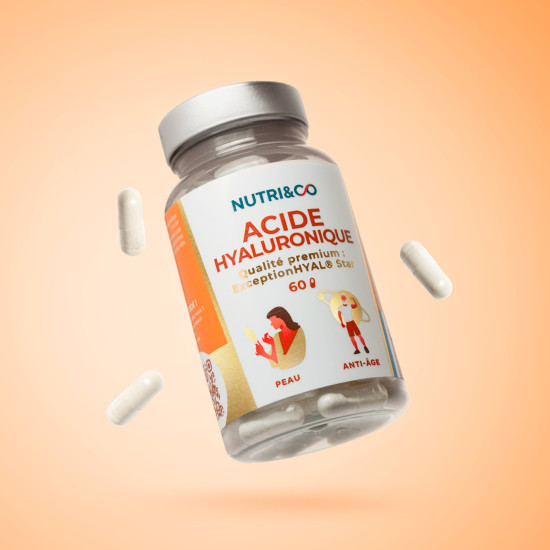
L'acide hyaluronique est l'autre molécule essentielle à la fermeté de la peau, agissant plus spécifiquement sur son hydratation. Une synergie parfaite avec le collagène pour préserver une peau jeune et repulpée.
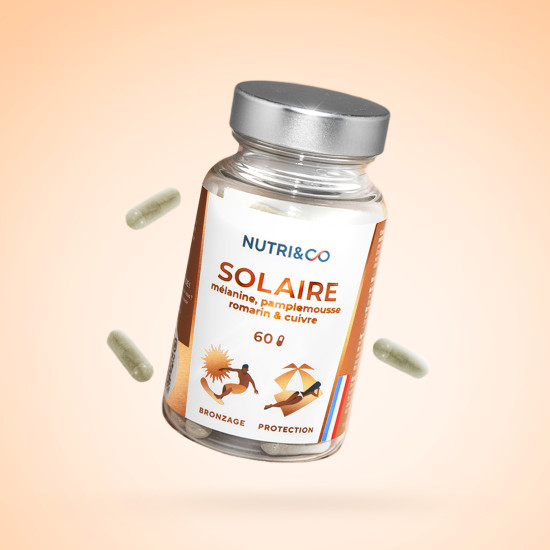
Le facteur numéro 1 de la perte de collagène est le soleil. Pour se protéger au mieux des rayons UV, notre formule Solaire apporte des antioxydants protecteurs tout en stimulant le bronzage naturellement.
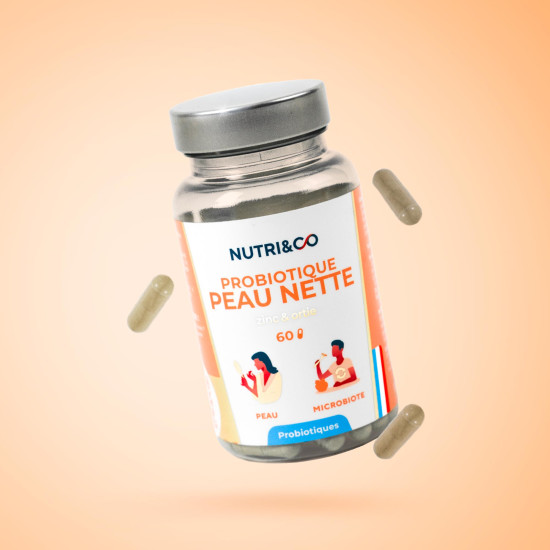
Le collagène n'agit pas sur les imperfections de la peau et l'excès de sébum. C'est là qu'intervient notre Probiotique Peau Nette, grâce à son complexe de probiotiques breveté, avec du zinc et de l'ortie en synergie, pour favoriser une peau saine.
Routine articulations
> Tout les compléments pour les articulations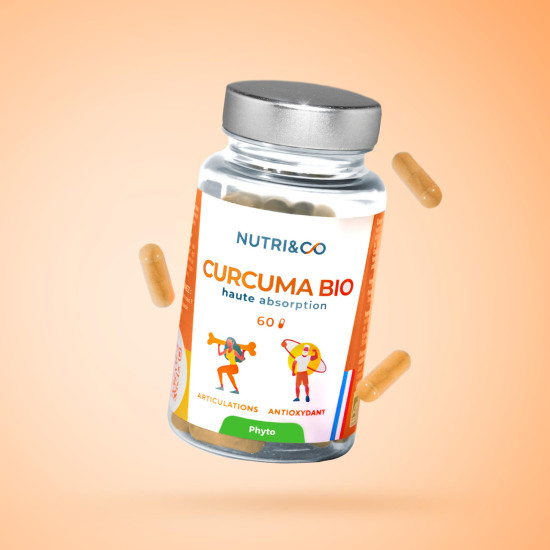
Avec son action rapide sur la gêne articulaire, notre Curcuma Bio s'associe parfaitement au collagène qui cible le maintien de la structure articulaire sur le long terme.
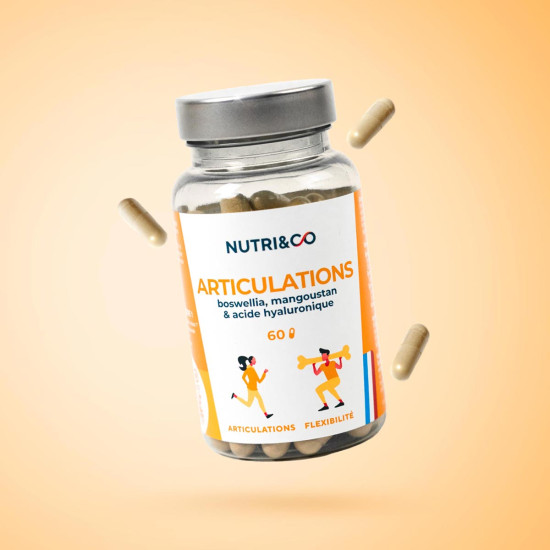
Naturellement nos articulations perdent de leurs composés : collagène, acide hyaluronique... Le duo Formule Articulations et Collagène permet de lutter contre ces pertes, mais également contre l'inflammation qui en découle.
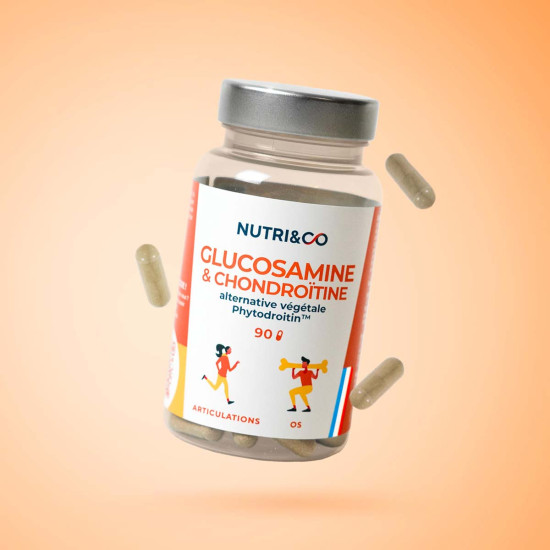
La glucosamine et la chondroïtine sont deux autres composants essentiels du cartilage. Une supplémentation sur le long terme permet de ralentir son usure en duo avec le collagène.

Vos questions sur le collagène
Nos experts répondent à toutes vos questions.
-
Le collagène peut-il vraiment effacer les rides ?
-
Sous combien de temps vais-je constater les effets du collagène ?
-
Existe-t-il des contre-indications ou effets secondaires au collagène ?
-
Puis-je combiner le collagène avec d'autres compléments ?
-
Peut-on donner du collagène aux enfants ?
-
Le collagène est-il végétalien ?
-
L'impact du collagène sur la perte de poids
-
Ce produit remplace-t-il une alimentation riche en protéines ?
Bibliographie
Gelse K, Pöschl E, Aigner T. Collagens—structure, function, and biosynthesis. Adv Drug Deliv Rev. 2003;55(12):1531-1546.
Shuster S, Black MM, McVitie E. The influence of age and sex on skin thickness, skin collagen and density. Br J Dermatol. 1975;93(6):639-643. doi:10.1111/j.1365-2133.1975.tb05113.x
Miner-Williams WM, Stevens BR, Moughan PJ. Are intact peptides absorbed from the healthy gut in the adult human? Nutr Res Rev. 2014;27(2):308-329.
Zague V, do Amaral JB, Rezende Teixeira P, de Oliveira Niero EL, Lauand C, Machado-Santelli GM. Collagen peptides modulate the metabolism of extracellular matrix by human dermal fibroblasts derived from sun-protected and sun-exposed body sites. Cell Biol Int. 2018;42(1):95-104. doi:10.1002/cbin.10872
Shigemura Y, Iwai K, Morimatsu F, et al. Effect of Prolyl-Hydroxyproline (Pro-Hyp), a food-derived collagen peptide in human blood, on growth of fibroblasts from mouse skin. J Agric Food Chem. 2009;57(2):444-449. doi:10.1021/jf802785h
Bischof K, Moitzi AM, Stafilidis S, König D. Effects of Long-Term Collagen Peptide Supplementation in Combination with Physical Training on Musculoskeletal Health in Adults: A Systematic Review and Meta-Analysis. Sports Med. 2024.
Pu SY, Huang YL, Pu CM, et al. Effects of Oral Collagen for Skin Anti-Aging: A Systematic Review and Meta-Analysis. Nutrients. 2023;15(9):2080. Published 2023 Apr 26. doi:10.3390/nu15092080
Brincat M, Moniz CF, Studd JW, Darby AJ, Magos A, Cooper D.Sex hormones and skin collagen content in postmenopausal women. Br Med J (Clin Res Ed). 1983;287(6402):1337-1338. doi:10.1136/bmj.287.6402.1337
Simental-Mendía M, Ortega-Mata D, Acosta-Olivo CA, Simental-Mendía LE, Peña-Martínez VM, Vilchez-Cavazos F. Effect of collagen supplementation on knee osteoarthritis: an updated systematic review and meta-analysis of randomised controlled trials. Clin Exp Rheumatol. 2025;43(1):126-134. doi:10.55563/clinexprheumatol/kflfr5
García-Coronado JM, Martínez-Olvera L, Elizondo-Omaña RE, et al. Effect of collagen supplementation on osteoarthritis symptoms: a meta-analysis of randomized placebo-controlled trials. Int Orthop. 2019;43(3):531-538. doi:10.1007/s00264-018-4211-5
de Miranda RB, Weimer P, Rossi RC. Effects of hydrolyzed collagen supplementation on skin aging: a systematic review and meta-analysis. Int J Dermatol. 2021;60(12):1449-1461. doi:10.1111/ijd.15518
Inacio PAQ, Gomes YSM, de Aguiar AJN, Lopes-Martins PSL, Aimbire F, Leonardo PS, Sá Filho AS, Lopes-Martins RAB. The Effects of Collagen Peptides as a Dietary Supplement on Muscle Damage Recovery and Fatigue Responses: An Integrative Review. Nutrients. 2024; 16(19):3403. https://doi.org/10.3390/nu16193403
Sun C, Yang A, Teng F, Xia Y. Efficacy of collagen peptide supplementation on bone and muscle health: a meta-analysis. Front Nutr. 2025;12:1646090. Published 2025 Sep 18. doi:10.3389/fnut.2025.1646090
Kim DU, Chung HC, Choi J, Sakai Y, Lee BY. Oral Intake of Low-Molecular-Weight Collagen Peptide Improves Hydration, Elasticity, and Wrinkling in Human Skin: A Randomized, Double-Blind, Placebo-Controlled Study. Nutrients. 2018;10(7):826. Published 2018 Jun 26. doi:10.3390/nu10070826


